National Beer Day
Visit a brewery, crack open a cold one with your friends, or learn how to brew your own beer on this hoppy holiday. Not a drinker?
Drive brewery visits, craft beer sales, and beer tourism experiences by positioning National Beer Day as the ultimate celebration for beer enthusiasts and casual drinkers alike.
- Brewery tour specials and tasting flight promotions for April
- Craft beer discovery campaigns featuring local and new varieties
- Beer tourism packages combining brewery visits with hospitality experiences
- Home brewing kits and alcohol-free beer options for inclusive celebrations

Iedereen ouder dan 50 zou DIT elke dag moeten nemen. Collageen is een van de meest cruciale eiwitten in het lichaam. Het zit in onze gewrichten, botten, huid en meer. Het probleem? Vanaf ons 25e produceert ons lichaam 1% minder collageen per jaar. Op ons 50e zijn we dus meer dan 25% van ons collagee
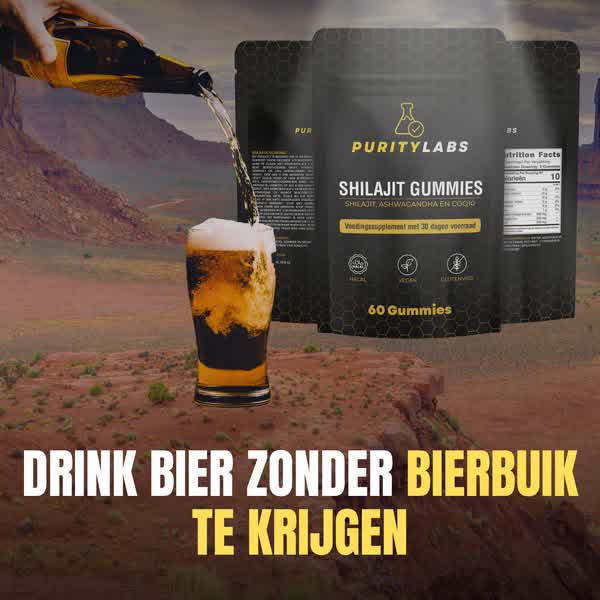
3 redenen waarom elke man dit MOET proberen... 🧬 Het is een bron van 84+ mineralen ⚡️ Ondersteunt mentale functie 🌱 Laboratorium getest op kwaliteit en veiligheid 💪 🔥 "Twee maanden gebruik en ik voel me geweldig! Het werd gelijk de volgende dag al geleverd en ik ben er super blij mee. Mijn vrouw

Maak kennis met Coffee 2.0 – Mushroom Coffee 🍄☕️ Met 5 geneeskrachtige paddenstoelen, 7 adaptogenen en collageen 🌿 Begin je dag met: ✨ Een heldere geest ⚡️ Geconcentreerde energie 😌 Zonder trillingen of nervositeit ✅ Probeer het zonder risico dankzij onze 90 dagen niet-goed-geld-terug-garantie

Maak kennis met Coffee 2.0 – Mushroom Coffee 🍄☕️ Met 5 geneeskrachtige paddenstoelen, 7 adaptogenen en collageen 🌿 Begin je dag met: ✨ Een heldere geest ⚡️ Geconcentreerde energie 😌 Zonder trillingen of nervositeit ✅ Probeer het zonder risico dankzij onze 90 dagen niet-goed-geld-terug-garantie
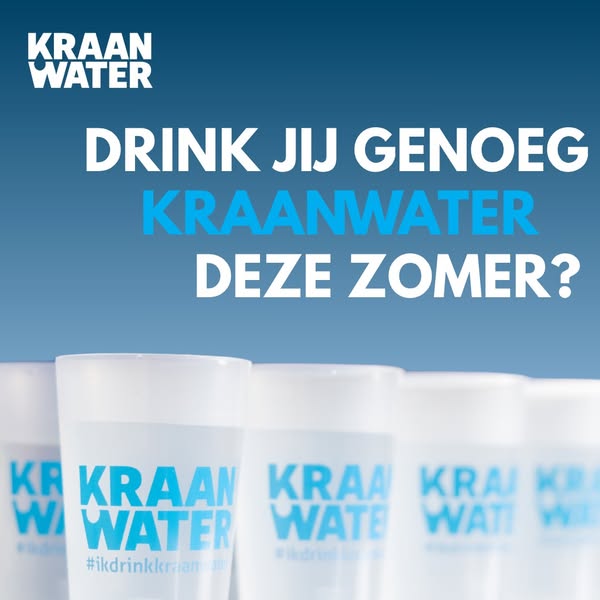
🧐 Even checken... hoeveel water drink jij tijdens een festivaldag? ➡️ 1 fles van 500ml ➡️ 2 tot 3 liter ➡️ Euh... telt bier ook? 😅 Gemiddeld heb je bij warm weer 2 à 3 liter vocht per dag nodig! Zorg dus dat je hervulbare drinkbus steeds binnen handbereik is. De rest... volgt vanzelf #ikdrinkkraan
Notable campaigns8
- Budweiser (Multiple years (sourced from annual campaigns)): Hosted a National Beer Day sweepstakes on Twitter where entrants had to retweet a post to win a year's worth of beer and a fridge to store it in. Retweet contests put brand messaging in front of thirsty audiences.
- Budweiser (2024): Created 644 custom Budweiser bottles celebrating Lionel Messi's 644 career goals, sent to all the goalies Messi scored on. Generated 3 billion impressions and $20 million in earned media value through a sports partnership angle.
- Stella Artois (2000s-2020s): Launched "Reassuringly Expensive" and "A Brand Ambassador Worth More" campaigns featuring celebrity characters (Carrie Bradshaw) switching from their iconic drinks to Stella, emphasizing premium positioning and cultural moments.
- Heineken (2023-2024): Created omnichannel digital-first campaigns with gamified experiences (eKoin collection for brand engagement redeemable for experiences) and culturally playful campaigns around major events.
- Ponysaurus Brewing (2024): Created a specialty beer and donated proceeds to LGBTQ+ charities in response to political statements, supported by cross-media campaign. Cause-driven positioning with authentic purpose.
- Corona (Multiple years): Partnered with Uber/Uber Eats for Cinco de Mayo (free rides and food deliveries) and promoted equal pay for female soccer players in Mexico, tying beer to cultural moments and social causes.
- Bia Saigon (2024): Created individualized provincial packaging for Tet celebration, then used geo-targeted mobile ads to inspire local pride and connect diaspora communities during holiday season.
- Oskar Blues Brewing & French's (2024): Cross-category partnership to launch mustard beer, generating 2 billion impressions, 23 million social impressions, and coverage in 900+ media outlets. Drove 6.4% YOY sales growth.
Campaign ideas8
- Host a sweepstakes with a retweet-to-enter mechanism (like Budweiser did with year's worth of beer + fridge prize) to amplify reach and get social sharing.
- Partner with a food brand for a limited edition co-branded beer (French's/Oskar Blues mustard beer example) — massive earned media potential.
- Launch a cause-focused special edition beer with charity donation (like Ponysaurus Brewing's LGBTQ+ fundraiser) to drive purpose-driven sales.
- Run brewery takeovers at partnered bars/restaurants with special pricing, local talent, or exclusive pours to drive foot traffic.
- Create a user-generated content campaign (#NationalBeerDay photo contest for "perfect pour" shots) to boost organic social engagement and community feel.
- Offer a limited-time discount or "free round" promotion at bars and breweries on April 7th to drive trial among lapsed drinkers.
- Launch a geo-targeted mobile ad campaign tied to local brewing heritage or regional beer styles to deepen local pride and reach.
- Host a virtual beer tasting experience on social media with local brewers doing live taste-notes and Q&A to build engagement and educate.
Social angles6
- Pour your heart out: Share your "perfect pour" or favorite beer moment with #NationalBeerDay. Cheers to the craft! 🍺
- From Prohibition to craft beer revolution: Celebrate the freedom to brew, sip, and celebrate. #NationalBeerDay #BeerCulture
- Tag a friend you'd raise a glass with. Let's celebrate this legendary day together. #NationalBeerDay #DrinkUp
- Local breweries, local pride: Spotlight your favorite regional brewery on #NationalBeerDay and help them shine.
- Four-day weekend energy unlocked: 48-hour flash sale on craft beer goes live now. Limited. Local. Legendary. #NationalBeerDay
- Raise a glass to the workers: Thank the bartenders, brewers, and servers keeping beer culture alive. #NationalBeerDay #SupportLocal
Ad copy starters5
“"A year's worth of beer is waiting. Retweet to enter. #NationalBeerDay" — Budweiser sweepstakes energy.”
“"The day beer came back. The day we celebrate freedom." — Prohibition-angle messaging.”
“"Craft. Culture. Community. It all starts with a pour."”
“"Taste something new on April 7th. Your next favorite beer is waiting."”
“"Local brewers. Big flavor. Zero compromise." — Supporting craft/small business angle.”
Tips4
- Don't ignore responsible drinking: Include designated driver messages, rideshare promos, or non-alcoholic beer options in all campaigns. It's legally smart and ethically right.
- Timing is everything: Tease on April 5-6 (New Beer's Eve), peak activation on April 7, extend offers through the weekend. Early Wednesday promotions capture lead time.
- Lean into the Prohibition-freedom narrative for broad emotional appeal, but focus craft/local angle to differentiate from mass-market competitors. Both angles work for different audiences.
- Partner with adjacent categories (food brands, entertainment, lifestyle) rather than just doing straight discounts. Cross-category collabs (beer + mustard, beer + music, beer + sports) generate earned media and reach new audiences.
The history of National Beer Day goes back, well, ostensibly as far as beer. And given that there is (apparently) the entire breadth of human history to explore in the examination of this delightful drink, where is the best place to begin?
The first thing to start with is a little bit of science, and how it plays into the creation of this frothy drink. Anyone who knows anything about beer production today knows that yeast is a vital element in its creation.
However, 7000+ years ago when beer began, yeast didn’t come in nice sealed foil packages waiting for nothing more than water and sugar to be added. No, it roamed wild and free. So how did brewer’s capture it?
The first beer was almost certainly created by accident when a container of wet cereal grains was likely left open to the sky, and the wild yeasts of the surrounding area happened to fall into it. That’s right, the same method used today for ensuring that food spoils is the exact same method they used for starting up a nice rich brew!
At the time, what this meant for beer-making was that every brew created was different, even in the same area. However, some consistency eventually became possible which, at the very least it meant that certain regions were known for the particular flavors that their yeasts imparted to their local beers.
As beer developed, it began to take on the characteristics and flavors that were preferred by the people, as well as the use of the materials which were available at the time. And its history continues on today from enormous companies to small craft breweries.
National Beer Day is celebrated on this day because it coincides with the day in 1933 when the 18th Amendment was repealed in the United States.
This act ended 13 years of prohibition and made beer (and other alcoholic beverages) legal again. Some people like to celebrate the night before, referring to it as “New Beer’s Eve”.
Beer has been part of human culture for thousands of years, long before modern breweries and craft tasting rooms appeared.
Ancient records, archaeological discoveries, and historical texts reveal that this familiar drink once played a central role in daily life, religion, and early city economies.
The following facts explore how beer shaped civilizations, traditions, and social habits across different periods of history.
Cuneiform tablets from ancient Mesopotamia show that beer was so central to early urban life that workers were often paid in daily beer rations instead of coins or grain.
Texts from the city of Uruk describe allocations of several liters per person, and residue found in vessels at sites like Godin Tepe and Khani Masi confirms large-scale brewing that paralleled the rise of the first cities.
The Sumerian “Hymn to Ninkasi,” dated to around 1800 BCE, is both a praise song to the goddess of beer and a step‑by‑step guide to brewing.
The poem describes mashing bread loaves made from malted grains, fermenting the liquid in large jars, and producing a foamy drink, providing one of the earliest written brewing “manuals” in history.
Archaeological finds from Mesopotamia include large communal beer jars fitted with long reed straws, and art from the third millennium BCE often shows groups of people drinking together from a single pot.
Chemical analysis of these vessels reveals beer residues, suggesting that early beer was thick and porridge‑like, better sipped through straws than from cups.
In medieval Europe, beer was often safer to drink than untreated water because the boiling of wort, the acidity from fermentation, and the presence of alcohol and hops reduced microbial contamination.
Historians studying household accounts and monastery records have found that “small beer,” with low alcohol but fully boiled and fermented, was a staple everyday drink for adults and even children.
According to the UN Food and Agriculture Organization, two of beer’s three core ingredients, malt and hops, are agricultural products whose cultivation has influenced farming systems for centuries.
Barley breeding for malting quality and the establishment of specialized hop-growing regions in Europe and North America show how beer demand has helped drive crop selection and rural economies.
A large review of observational studies published in a peer‑reviewed cardiology journal found that adults who drank beer in moderation, defined as up to about one drink per day for women and up to two for men, had lower rates of cardiovascular disease than both heavy drinkers and abstainers.
The authors attribute this partly to increases in HDL (“good”) cholesterol and the antioxidant polyphenols present in many beers.
Industry analysis using FAO and trade data shows that worldwide beer consumption has grown strongly since 1990 and today represents a global market estimated at around 250 billion U.S. dollars, making it one of the largest segments of the alcoholic beverage industry.
Growth has shifted from traditional beer‑drinking countries in Western Europe toward emerging markets in Asia, Latin America, and parts of Africa.
Get Friends Together to Celebrate National Beer Day
Celebrating National Beer Day is probably one of the greatest celebrations a dedicated beer lover can have! Simply go out and buy a selection of favorite brews, and also a few varieties that may be new. Get friends together to share their favorite flavors and to bring a few new options to the mix. People may talk about wine as the pinnacle of culture, but these people have simply never had the joy of a beer sampler from a local brewery, or discovering the hoppy nature of a little-known beer. Is National Beer Day for Beer Hipsters? It’s possible. But it’s also for anyone who happens to love a tasty brew.
Visit a Local Brewery
In today’s beer culture, it’s easy to find a local craft brewery that offers tours, tastings, and even other fun activities. While many are located in larger cities, some have also begun to see the beauty in placing their beer brewery locations outside the city limits–on farms or in rural areas. Some have even converted old barns or farm buildings to house their beer-making equipment and activities. Once at the brewery, learn the history of beer itself as well as the local history of the particular place and types of beer brewed. See the production lines and hear stories while on the tour. A beer tasting is likely to be on offer, sometimes tapped directly from the tanks to ensure freshness.
Enjoy some Beer Tourism
For those hard-core beer lovers, it only makes sense to combine a vacation with the soaking up of all-things-beer. Try visiting these cities that are famous for their beer industries: Munich, Germany. The originating city for Oktoberfest in 1810 is fabulous–and not only in October. They make beer all year round! While there, enjoy Hofbrauhaus or Augustiner-Bräu beer halls, where it is customary to sing German songs and slam glasses onto the wooden tables. Pilsen, Czech Republic. Why not visit the country that has (by far) the highest annual per capita beer consumption in the world? They must know something about beer. The origins of the pale golden Pilsner beer (named after the city) began here in 1839, which makes a tour of the Pilsner Urquell Brewery a must-see. Portland, Oregon, USA. With more than 70 breweries (not counting the suburbs), this is one of the biggest homes of beer in America. Filled with all different varieties of craft beer (like Hair of the Dog), there’s something for every beer lover in the City of Roses. Tokyo, Japan. In recent years, the beer culture in Asia has begun to grow. This is evidenced by the fact that Tokyo now boasts more than 400 craft breweries and taprooms. When in the city, the quintessential visit is to Popeye (Ryogoku), the famous spot with more than 70 beers on tap! National Beer Day Timeline13,000 BCE Stone Age Origins of Beer Residues of fermented grain found on stone mortars in Raqefet Cave in today’s Israel show that late Natufian hunter-gatherers were brewing a rudimentary beer for ritual feasts long before agriculture fully took hold. [1]Late 4th millennium BCE First Physical Traces of Beer in Mesopotamia Chemical analysis of vessels from the site of Godin Tepe in present-day Iran reveals beerstone deposits, providing some of the earliest direct physical evidence of beer production in the ancient Near East. [1]1800 BCE Hymn to Ninkasi Records a Sumerian Beer Recipe The Sumerian “Hymn to Ninkasi” praises the goddess of beer while outlining a step-by-step method for brewing beer from barley, showing how central beer was to daily life and religion in ancient Mesopotamia. [1]1516 Bavarian Beer Purity Law Shapes European Brewing Dukes Wilhelm IV and Ludwig X of Bavaria issued the Reinheitsgebot, limiting beer ingredients to barley, hops, and water and regulating prices, an early food law that influenced German brewing standards for centuries. [1]19th Century Industrial Technology Transforms Beer Production Steam power, scientific malting, and later refrigeration and pasteurization allow breweries to scale up, control fermentation, and ship stable beer over long distances, turning beer into a truly industrial product. [1]Mid–19th Century Rise of Lager and Cold-Fermented Beer Brewers in Bavaria and Bohemia refined the use of bottom‑fermenting lager yeast and cold cellaring, giving rise to pale lagers such as Pilsner that eventually became the world’s dominant beer style. [1]1960s–1980s Modern Craft Beer Movement Emerges in the U.S. Small American brewers begin reviving traditional and experimental styles in reaction to mass‑market lagers, laying the groundwork for today’s craft beer culture of diverse flavors, local breweries, and tasting rooms. [1]
Stone Age Origins of Beer
Residues of fermented grain found on stone mortars in Raqefet Cave in today’s Israel show that late Natufian hunter-gatherers were brewing a rudimentary beer for ritual feasts long before agriculture fully took hold. [1]
First Physical Traces of Beer in Mesopotamia
Chemical analysis of vessels from the site of Godin Tepe in present-day Iran reveals beerstone deposits, providing some of the earliest direct physical evidence of beer production in the ancient Near East. [1]
Hymn to Ninkasi Records a Sumerian Beer Recipe
The Sumerian “Hymn to Ninkasi” praises the goddess of beer while outlining a step-by-step method for brewing beer from barley, showing how central beer was to daily life and religion in ancient Mesopotamia. [1]
Bavarian Beer Purity Law Shapes European Brewing
Dukes Wilhelm IV and Ludwig X of Bavaria issued the Reinheitsgebot, limiting beer ingredients to barley, hops, and water and regulating prices, an early food law that influenced German brewing standards for centuries. [1]
Industrial Technology Transforms Beer Production
Steam power, scientific malting, and later refrigeration and pasteurization allow breweries to scale up, control fermentation, and ship stable beer over long distances, turning beer into a truly industrial product. [1]
Rise of Lager and Cold-Fermented Beer
Brewers in Bavaria and Bohemia refined the use of bottom‑fermenting lager yeast and cold cellaring, giving rise to pale lagers such as Pilsner that eventually became the world’s dominant beer style. [1]
Modern Craft Beer Movement Emerges in the U.S.
Small American brewers begin reviving traditional and experimental styles in reaction to mass‑market lagers, laying the groundwork for today’s craft beer culture of diverse flavors, local breweries, and tasting rooms. [1]