Mothering Sunday in the U.K
Mothering Sunday in the U.K. is a day full of love and appreciation, with a distinctly British backstory and a very simple modern mission: make the maternal figures in life feel seen.
Drive gifting and celebration sales across flowers, baked goods, and premium treats by positioning Mothering Sunday as a distinctly British occasion to honor maternal figures with homemade and curated gifts.
- Simnel cake recipe tutorials and baking kits—capitalize on the traditional British bake trend
- Seasonal flower bundles (daffodils, tulips) and potted plant gift sets with personalization options
- Gift guides pairing homemade treats with premium flowers and gift wrapping for last-minute shoppers
- User-generated content campaigns: #MotheringMoments featuring family baking and flower gifting stories
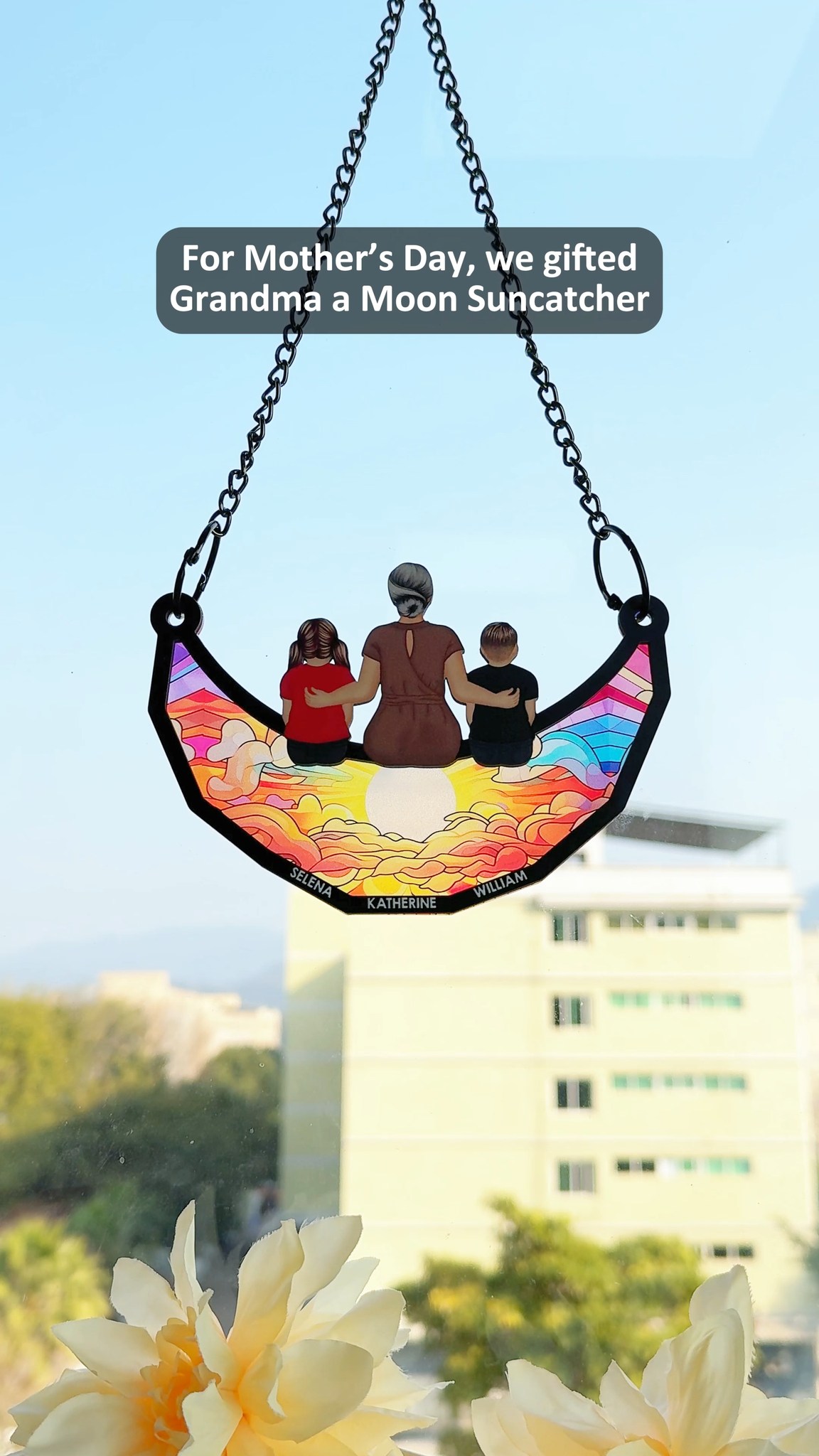
Make Mother’s Day special with the "Grandma and Grandkids on the Moon Suncatcher" Worldwide shipping! #wanderprints #personalized #gifts #suncatcher #customgift #grandmagift #mothersdaygift #specialgift #customized #personalizedgift #familygift #memorygift #mothersday

Give her the gift of comfort this Mother's Day 🌸 Sunday 15th March


“Will tomorrow come first or will the unexpected?” After a serious illness in late 2022, Dato’ Seri Toh Soon Huat JP, Volunteer Executive Chairman of Sian Chay Medical Institution, gained a deeper appreciation of life’s impermanence. Once a child who knew poverty and hardship, he now leads with comp

💕 Surprise Mom with a thoughtful gift that speaks from the heart. Not just a shirt – it’s a reminder of how loved she is, every single day. 🎁 Perfect for Mother’s Day, birthdays, or simply because she deserves it. Order now: https://funpickgifts.com/en-us/product/698C47E2B6F94VK?sref=693
Campaign ideas8
- Create an inclusive 'Every Mum' video spotlight series highlighting adoptive, step-, foster, and non-biological mothers—amplify on YouTube, Instagram & TikTok with hashtag campaign
- Launch a limited-edition gift bundle (or interactive in-store workshop) that positions shopping as a shared experience rather than transactional—think LEGO rose-building or personalised craft stations
- Develop a 'self-care over flowers' gifting campaign showcasing relaxation kits, spa experiences, and wellness packages—perfect for salon/wellness brands
- Run a sensitive opt-out email strategy offering customers the choice to skip Mother's Day emails if the day is difficult for them—builds brand loyalty & trust
- Create a humour-driven campaign playing on relatable motherhood moments (tech struggles, parenting chaos, contradictions) to cut through emotional noise
- Set up a gift guide landing page with curated categories, price filters & personal styling tips to reduce decision fatigue—update 3-4 weeks before 15 March
- Launch a user-generated content campaign inviting customers to share their 'real motherhood' stories via hashtag (not just the highlight reel)
- Offer flash sales or limited-time bundles with urgency messaging in subject lines (48-72hr windows work well) to drive conversion among last-minute buyers
Social angles7
- 'Call Mum, message Mum, email Mum—but actually show up.' Simple humanity angle that taps into connection beyond consumerism. #MothersDay #MothersDay2026 #MotheringDunday
- Real mums, real stories, real messy moments. No filters, no perfect family photos—just the reality of motherhood. Who else? #OneRealMotherhood #EveryMum
- Repost customer stories: 'This is what motherhood means to [name]' — builds community & shows diverse definitions of 'mum'. Encourage tagging via hashtag.
- Throwback nostalgia angle: Share archival brand moments or customer memories from years past—Gen Z & Millennials respond well to 'remember when' content.
- 'Mum says she doesn't want anything. Translation: [list of actual gifts she'd love].' Relatable humour that positions your products as the solution.
- Sustainability/experience angle: 'Give time, not things' posts featuring activity ideas, spa experiences, or memories over material gifts. #ExperiencesNotThings #SelfCare
- Opt-in positivity: 'Not celebrating this year? That's OK. We're here if you need us.' Empathetic tone that acknowledges the day isn't joyful for everyone.
Ad copy starters7
“For every mum. For every kind of mum. This Mothering Sunday, celebrate her story.”
“Mum says she doesn't need anything. (She's lying. Here's what she actually wants.)”
“Not all heroes wear capes. Some wear aprons, scrubs, work boots, and everything in between.”
“This year, give her what she really needs: time. Explore our gift experiences →”
“Real mums, real talk, real appreciation. Shop our Mother's Day edit.”
“The hardest job in the world is the best job in the world. Thank her.”
“Skip the guilt. Opt out of our Mother's Day emails if today isn't your day. We're here anyway.”
Tips4
- DO: Launch 3-4 weeks before 15 March 2026 (UK search peaks 7-13 March)—don't wait until the week-of. DO segment your audience by geography if global; Mothering Sunday dates vary.
- DON'T: Default to saccharine, nuclear-family imagery. DO show real diversity: step-mums, adoptive mums, foster mums, aunties, mentors, single dads, and non-traditional families. Inclusive campaigns outperform.
- DO: Always include an opt-out option for Mother's Day emails. It's now table-stakes after Bloom & Wild's 2019 campaign—sensitivity converts to loyalty & media praise.
- DO: Balance emotion with humour or relatability; heavy-handed sentimentality gets lost in the noise. Campaigns that acknowledge parenting chaos, tech struggles, or real pressure points cut through better.
Mothering Sunday in the U.K. has roots that stretch back centuries, and its early meaning was not primarily about moms at all. The day fell on the fourth Sunday of Lent, a point in the church calendar that was sometimes known as Laetare Sunday or “Refreshment Sunday.”
Lent was traditionally a time of reflection and restraint, and this mid-Lent Sunday offered a small easing of the strictness, hence the idea of “refreshment.”
Originally, the focus was on returning to the “mother church.” For many people, that meant the main church in the area, a cathedral, or the church where a person was baptized.
The practice encouraged worshipers to reconnect with their wider church community rather than staying only within a local chapel or small parish. In an age when communities were more scattered and travel was slower, a shared day of return helped maintain social and spiritual bonds.
Over time, the observance gathered additional layers. In medieval and early modern Christian practice, the day also carried associations with honoring Mary, the mother of Jesus, and with the broader symbolism of “motherhood” as care, protection, and belonging.
People brought flowers as part of worship and celebration, and that custom left a long shadow. Even in very modern Mothering Sunday celebrations, it is hard to separate the day from the visual language of flowers, especially bright spring blooms.
By the 17th century, Mothering Sunday had also become a rare and treasured chance for family reunions, particularly for those who worked away from home. Domestic servants and apprentices often lived where they worked and had limited time off.
The fourth Sunday of Lent became a customary day when many were allowed to travel home, attend church with their families, and visit their mothers. It was not just a sweet tradition. It was practical, too, because it created a predictable moment in the year when employers, workers, and families could plan around the same expectation.
Gifts entered the picture in an unpretentious way: small tokens, picked flowers, and homemade food brought home as proof that someone had been thinking of their family while away. One food that became closely linked with the day was the Simnel cake, a fruitcake often layered or topped with marzipan.
In some households, it was baked as a treat that could be saved for Mothering Sunday, since it arrived mid-Lent and could feel like a welcome break from the usual simplicity of the season.
As society changed, the custom weakened. Industrialization and shifting work patterns altered the old servant-and-apprentice rhythms that once made Mothering Sunday such a reliable homecoming moment. Like many traditions tied to older forms of community life, it risked fading into the background.
In the early 20th century, Mothering Sunday gained new momentum thanks to deliberate revival efforts. Constance Adelaide Penswick-Smith became a key figure in bringing attention back to the day.
Inspired in part by the growing popularity of Mother’s Day in the United States, she advocated for renewing Mothering Sunday in a way that respected its older meaning while making it relevant to contemporary family life. Her message emphasized appreciation, family connection, and the value of motherhood, not merely a commercial reason to buy a card.
Gradually, Mothering Sunday evolved into what many people recognize it as today: a widely observed day centered on mothers and maternal figures, often marked by giving cards, flowers, and thoughtful gifts, as well as making time for a meal together.
While its date remains tied to the church calendar, modern participation ranges from the religious to the purely familial. The result is a celebration that can be meaningful in many different kinds of households.
Whip Up a Homemade Treat
Bake a cake or whip up her favorite dessert. The kitchen might get messy, but it is worth it. A homemade treat shows time and attention, which is often the real gift. A traditional Simnel cake is a fun option for anyone who likes a classic British bake. It is typically fruit-based and finished with marzipan, which can be torched or browned in the oven for a toasty top. For those who do not love fruit cake, the spirit still counts: shortbread, lemon bars, banana bread, or a batch of cookies can deliver the same message, especially if they are made with her preferences in mind. A helpful detail is planning the “after” as well as the “during.” Cleaning up without being asked can be the quiet hero move of the day. If children are involved, letting them help measure, stir, and decorate can turn the treat into a shared memory rather than a rushed chore.
Send a Surprise Bouquet
Nothing says “I appreciate you” quite like a bouquet, and Mothering Sunday has a long-standing connection to flowers. Pick seasonal blooms that feel cheerful and fresh. Daffodils and tulips are popular for a reason: they look like someone turned up the brightness in the room. For a more personal approach, choose flowers that match her style. Some people love big, colorful arrangements; others prefer something simple and green. A small potted plant can be a good alternative for anyone who likes something that lasts beyond the week. A bouquet becomes even more meaningful when it comes with a note that is not generic. A few specific lines, such as “Thank you for always showing up when it matters” or “I learned how to be brave by watching yo,u” can turn flowers into a keepsake moment.
Plan a Relaxing Day
Let her put her feet up while someone else takes charge. “Relaxing” can mean different things depending on the person, so it helps to think about what actually makes her day easier. For some, relaxation looks like a slow morning, breakfast brought to her, and a plan where she does not have to coordinate everyone’s schedules. For others, it means a break from repetitive tasks. Taking over chores without turning it into a performance is often the most appreciated gift: laundry handled, dishes done, errands run, pets walked, and the general household chaos dialed down. Adding a small personal touch can make the day feel intentionally designed. That might be a favorite movie, a long bath, an audiobook downloaded in advance, or a few uninterrupted hours for a hobby. The key is to make sure the “time off” does not come with hidden work, such as planning the meal or managing the cleanup.
Craft a Personalized Card
Get crafty and create a handmade card. A card may be small, but it is often the piece that gets saved in a drawer for years. The words inside matter more than perfect design. A strong card message usually includes one specific memory and one clear statement of appreciation. Something as simple as “I still think about how you stayed up with me when I was sick” lands more deeply than a list of general compliments. Children can contribute drawings, handprints, stickers, or a short list of “Things I Love About You,” which tends to be both funny and unexpectedly touching. For adults who feel awkward writing sentimental notes, a practical approach helps: start with “Thank you for…,” add “It made a difference because…,” and end with “I love you” or “I appreciate you” in whatever words feel natural. Sentiment does not have to be fancy to be real.
Organize a Family Walk
A family walk is a low-pressure way to spend time together, and it suits Mothering Sunday’s mid-Lent, early-spring character. Choose a route that matches everyone’s energy levels. A gentle loop around a park or a botanical garden can feel special without requiring athletic ambition. To make it feel like an event rather than “just a walk,” add a small plan: bring a thermos of tea, pack snacks, or stop somewhere scenic for a photo. If the group includes multiple generations, a stroll can be especially nice because it allows conversation to happen naturally in small clusters, rather than forcing everyone into one loud table. For families who live apart, a “parallel walk” works surprisingly well. Each household takes a walk where they are, then shares photos or calls during the stroll. It is a simple way to create a shared experience even when travel is not possible. Little-Known Facts About Mothering Sunday in the U.K.Mothering Sunday in the United Kingdom has deeper roots than modern cards and gifts suggest.Long before it became a day focused mainly on celebrating mothers, the tradition reflected church life, working-class realities, and simple acts of care shaped by necessity and community.These lesser-known facts reveal how faith, family, and everyday life gradually transformed the day into the meaningful occasion it is today.Mother church was originally about place, not parent In early modern England, the “mother church” people visited in mid-Lent was not a symbolic idea of motherhood but a specific place: the cathedral or main parish church that oversaw the area’s smaller “daughter” churches. Returning there each year on Laetare Sunday reinforced ties to church authority and local identity long before the tradition broadened into celebrating individual mothers. “Going a‑mothering” was a rare holiday for child workers By the 17th century, many English children as young as ten worked as live‑in domestic servants or apprentices, often far from home with no regular time off. Mothering Sunday became one of the few sanctioned days when employers were expected to release them so they could walk home to see their families, a practice widely known as “going a‑mothering.” Hedgerow flowers and “mothering” posies grew out of necessity The custom of giving mothers small bunches of spring flowers has roots in practicality as much as sentiment. Servants walking long distances home would gather wild primroses, violets, and other hedgerow blooms on the way, creating modest “mothering” posies they could afford at a time when buying hot‑house flowers was far beyond a working family’s means. Simnel cake started as a Lenten luxury, not a children’s myth Simnel cake, now strongly linked with Mothering Sunday, began in medieval England as a rich Lenten bread made from “simila,” a fine, sifted flour usually reserved for the wealthy. Later folklore claimed the cake was invented by a quarrelling couple named Simon and Nell, who compromised on boiling and baking the dough, but historians have traced the name instead to its Latin and Old French linguistic roots. Laetare Sunday briefly lightened strict medieval fasting Mothering Sunday coincides with Laetare Sunday, when medieval Christians were allowed a brief relaxation of Lent’s austerity. Church authorities permitted richer foods such as eggs, butter, and sweetened breads, which helped give rise to celebratory dishes like simnel cake and turned the day into a welcome psychological break in the middle of a long fast. The Virgin Mary helped shift focus from church to motherhood In the Middle Ages, liturgical readings for the fourth Sunday of Lent emphasized the image of the Church and of the Virgin Mary as nurturing mothers. Sermons, prayers, and Marian devotions on this day gradually encouraged people to associate the occasion not only with their “mother church” but also with the idea of honoring human mothers who mirrored Mary’s care and intercession. Mothering Sunday and U.S. Mother’s Day have unrelated roots Although they now look similar, the British and American celebrations grew out of different traditions. Mothering Sunday emerged from medieval Christian liturgy and parish life, while U.S. Mother’s Day began in 1908 as a secular campaign by Anna Jarvis to honor her own mother and promote pacifism; only in the 20th century were the two strands blended in British popular culture. Mothering Sunday in the U.K FAQsIs there a difference between “Mothering Sunday” and “Mother’s Day” in the U.K.? In the U.K., “Mothering Sunday” is the traditional Christian observance tied to the fourth Sunday of Lent and originally linked to visiting the “mother church,” while “Mother’s Day” is the more modern, commercial name often used by retailers and the media. Today, most people treat the terms as referring to the same occasion, but historically Mothering Sunday has distinct religious roots and a variable date, unlike the American-style Mother’s Day fixed in May. [1]How is Mothering Sunday different from Mother’s Day in countries like the United States? Mothering Sunday in the U.K. follows the church calendar and falls on the fourth Sunday of Lent, whereas Mother’s Day in the United States and many other countries is a secular celebration held on the second Sunday in May. The American day was created in the early 20th century as a civic holiday, while Mothering Sunday evolved over several centuries from a religious observance into a broader celebration of mothers. [1]Why are church and religion so closely linked with the idea of motherhood in Mothering Sunday? Mothering Sunday developed in a Christian context where “motherhood” referred not only to biological mothers but also to the “mother church” and, in some traditions, to the Virgin Mary and the heavenly Jerusalem described in the Bible. Over time, as people traveled home to their mother church, the day naturally became a time for family reunions and recognizing human mothers as well, blending spiritual and family meanings of motherhood into a single observance. [1]How did social class and domestic service shape earlier traditions of honoring mothers in Britain? In early modern Britain, many young people worked as domestic servants or apprentices far from home and had little free time, so employers often gave them the fourth Sunday of Lent off to visit their families. This rare day of leave meant that going home to see one’s mother and bringing small gifts became a key way working‑class families could show appreciation, making the custom of honoring mothers particularly important for those in service. [1]How did social class and domestic service shape earlier traditions of honoring mothers in Britain?In early modern Britain, many young people worked as domestic servants or apprentices far from home and had little free time, so employers often gave them the fourth Sunday of Lent off to visit their families. This rare day of leave meant that going home to see one’s mother and bringing small gifts became a key way working‑class families could show appreciation, making the custom of honoring mothers particularly important for those in service. [1]How did social class and domestic service shape earlier traditions of honoring mothers in Britain? In early modern Britain, many young people worked as domestic servants or apprentices far from home and had little free time, so employers often gave them the fourth Sunday of Lent off to visit their families. This rare day of leave meant that going home to see one’s mother and bringing small gifts became a key way working‑class families could show appreciation, making the custom of honoring mothers particularly important for those in service. [1]How did social class and domestic service shape earlier traditions of honoring mothers in Britain? In early modern Britain, many young people worked as domestic servants or apprentices far from home and had little free time, so employers often gave them the fourth Sunday of Lent off to visit their families. This rare day of leave meant that going home to see one’s mother and bringing small gifts became a key way working‑class families could show appreciation, making the custom of honoring mothers particularly important for those in service. What is the connection between Mothering Sunday and Simnel cake? Simnel cake is a rich fruitcake with a layer of marzipan, traditionally associated with the midpoint of Lent and especially with Laetare Sunday, which is the same day as Mothering Sunday. Historically, people traveling home to visit their mothers would sometimes bring a Simnel cake as a gift, so the cake became linked not only with a break from Lenten austerity but also with gratitude and family reunion. [1] Has the meaning of “mother” in Mothering Sunday always referred only to biological mothers? No, the term originally referred to the “mother church,” and over time it expanded to include biological mothers, other maternal relatives, spiritual mothers, and women who played a mothering role in a person’s life. Church materials today often acknowledge this wider understanding, recognizing that caregiving and guidance can come from stepmothers, grandparents, foster carers, godparents, and other significant figures as well as birth mothers. [1]Why do some historians mention ancient Greek or Roman festivals when discussing the idea of a day for mothers? Some writers point to ancient spring festivals for mother goddesses, such as the Greek celebrations of Rhea or the Roman cult of Cybele, to show that honoring a maternal figure in springtime has deep cultural roots. While these classical festivals are not direct ancestors of Mothering Sunday, they illustrate a long-standing human tendency to link motherhood, fertility, and renewal with special days of ritual, offering a broader historical backdrop for modern celebrations of mothers. [1]